


Scaling FYLD
The Form Builder
Problem
FYLD’s legacy form building experience was broken. Customers had to build forms in JSON with support from Ops. This created significant friction: form creation and maintenance was slow, problematic, and not scaling.
Approach
I led the 8-week project to design and scope a new drag & drop form builder in our XFT of 7, transforming JSON form creation into a self-serve, intuitive experience and putting power into the users' hands.
My role
-
Project management
-
Product & design strategy
-
Research
-
Stakeholder management
-
Technical scoping
-
UX & UI design
-
User testing
-
Handoff
This marked a strategic shift toward a more scalable and more competitive forms offering, enticing more customers and supercharging FYLD's Series B funding round.
Kickoff / Discovery
Given the technical lift this feature would require, it was critical to define user needs, business logic, AI capabilities and technical considerations through a mix of collaboration and careful research.
Stakeholder & user workshop
Among other activities, I held a half-day session including our ops team, internal stakeholders, and 3 key customers to kickoff and align on:
-
Personas (who needs the form builder, the context, their needs).
-
Critical use cases.
-
Key user needs.
-
Where most time is spent.
-
Frustrations and failure points.
-
Critical vs rarely used functionality.
-
Key technical limitations.

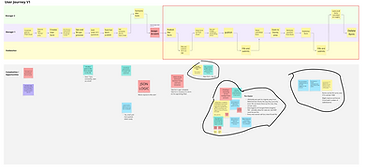
Key Insights
-
Top personas: Office admins and safety managers.
-
Backwards compatibility with ~1,300 active forms is a must.
-
Conditional logic: Essential but poorly understood.
-
Biggest time-suck: Drafting the first version of a form.
-
Components: Many forms use similar patterns (opportunity here for merging).
Squad Ideation


Hero Features
AI form converter
-
"Drafting the first version of a form is the biggest single timesuck."
-
"All forms are digitised into the system from existing workflow on paper, pdf. or another form builder."

Learning: Demoing the MVP to customers showed how quickly their existing PDFs can be ingested into a set of JSON components was a huge "wow" factor.
Drag & Drop Builder
-
Backwards compatibility with ~1,300 active forms is a must.
-
All existing JSON widgets must necessarily be represented to users as configurable components in the drag and drop builder.
-
Process: Existing JSON snippets > Merge where possible > Test & iterate mid-fi designs > High-fidelity UI.


Learning: This presented an opportunity to merge similar patterns, reducing the total number of possible elements from 21 to 17 and consolidating code at the same time.
Conditional Logic
Ops previously told us: "Conditional logic is essential, but poorly understood."
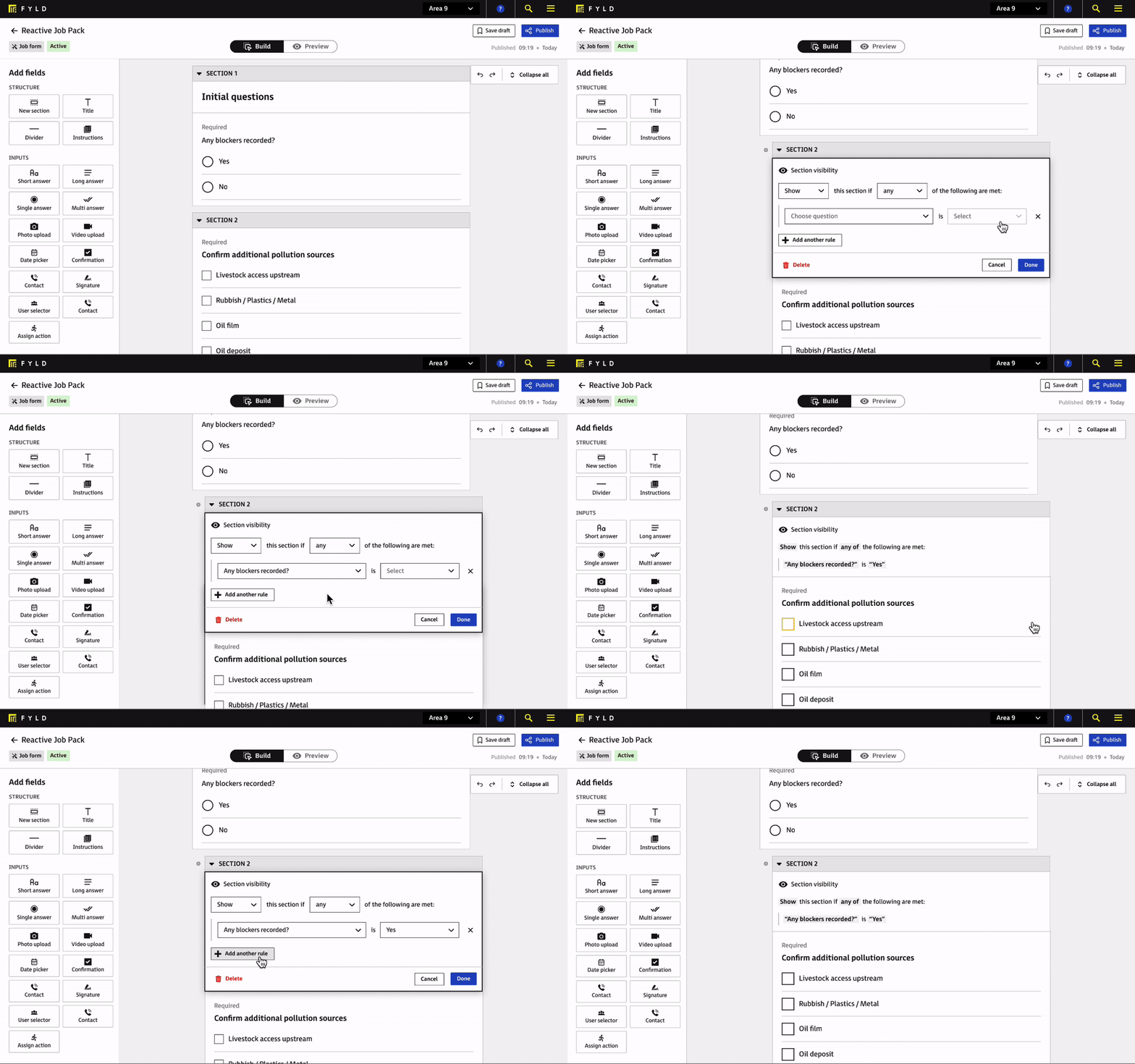
Learning: Existing conditional logic was set at a section level, rather than per question. This was unintuitive for new users during testing, however using the name "section visibility" instead of "conditional logic" resolved the understandability in most cases, and placing within the hover menu was discovered easily by test participants.
End-to-End Prototype
A quick whistle stop tour of the form builder experience. This is the V2 end-to-end flow we tested on Maze: 5 tasks with 5 users.
Developer Handoff
Outcome & Next Steps
-
FYLD raised £32m of Series B funding in January 2026.
-
The form builder feature is a primary contractual commitment to ensure more than £1.5m ARR, which directly impacted valuation and funding.
-
Delivery of Form Builder V1 was completed in March 2026 and is live with 3 customers, staged rollout will continue into Q2.
-
Ongoing experience analytics, qualitative feedback and anything from support channels will form the basis for any UX updates in Q2.
